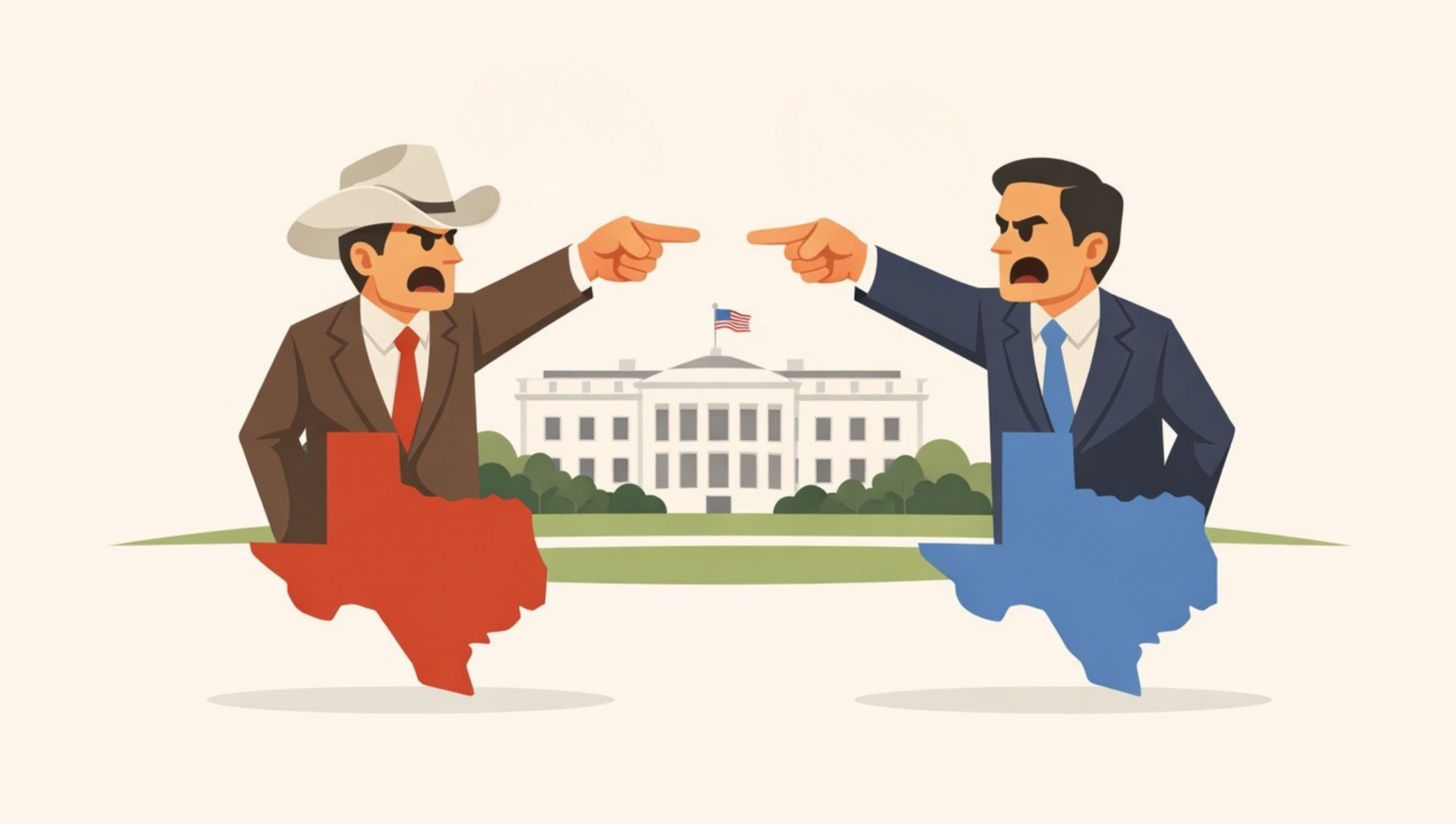


Overcoming the Imperial Bureaucracy Requires a Strong Executive
This opinion piece was originally published at Bill Peacock’s ExcellentThought HERE. It is being republished with permission from the author.
“The executive Power shall be vested in a President of the United States of America.” – Article II, Section 1 of the United States Constitution
“In the last years, presidential primacy, so indispensable to the political order, has turned into presidential supremacy.” – Authur Schlesinger Jr., The Imperial Presidency (1973)
“Imperial presidency” is an oft used term these days. Coined, or at least popularized, by Authur Schlesinger Jr., in the waning days of Richard Nixon’s presidency, it has been a favorite term of liberals to describe every Republican administration since.
When it comes to Donald Trump, though, critics from wavelengths across the political spectrum seem tuned to the same frequency—everything he does proves the imperial presidency lives on:
“[T]here is nothing limp or constrained about Trump 2.0: It’s an imperial presidency, full stop.” – Ross Douthat, The New York Times
“[T]here’s little question that Trump is taking the concept of the imperial presidency to its apogee.” – Steven Greenhut, RStreet
“I contend that Donald Trump represents the apotheosis of the imperial presidency, whereby a single person has come to exercise almost total spiritual, moral, and psychological control over civil society.” – Jay Cost, National Review
For the last half century, almost all these critics of the so-called ‘imperial presidency’ have missed the real danger. The gravest threat to American liberty comes not from strong presidents but from the Administrative State—or Imperial Bureaucracy—built by Congress and sustained by the courts to erode the democratic nature of the presidency as designed by our Founders in the U.S. Constitution.
This oft ignored and misdiagnosed constitutional conflict is now out in the open. As President Trump attempts to staff his administration with people who will carry out the will of the American people who elected him, the Administrative State and its congressional, judicial, and non-governmental supporters are fighting back.
A representative episode of this conflict took place when Trump appointee Robert F. Kennedy, Jr. replaced the entire membership of the Advisory Committee on Immunization Practices. The main criticism of his move was that many of the new committee members “are chiefly famous for espousing contrarian views with respect to vaccine safety and efficacy.” That is, Kennedy was criticized because he appointed members to the committee who espouse views similar to the majority of Trump voters.
America’s founders knew this conflict over personnel was inevitable. Addressing this issue was one reason behind the founder’s system of checks and balances. They understood concentrated power turned into tyranny, whether that power was in the people—through a pure democracy—or in the government, so they distributed governmental power into three branches: legislative, executive, and judicial.
Where modern critics dread a strong president, though, the founders feared something far more likely to occur: a congressional power grab. To counter the potential of a tyrannical Congress, Madison wrote “the weakness of the executive may require, on the other hand, that it should be fortified.”
And fortify it they did, vesting the executive power in a single man, the “President of the United States of America.” Part of the constitutional exercise of executive power is the president (or occasionally those he has previously appointed) “appoint[ing] Ambassadors, other public Ministers and Consuls, Judges of the supreme Court, and all other Officers of the United States.” Article II also makes it clear that executive personnel answer directly to the president by giving him the authority to “require the Opinion, in writing, of the principal Officer in each of the executive Departments, upon any Subject relating to the Duties of their respective Offices.”
The founders rightly anticipated Congress’ aims on executive power. As soon as the American government was formed, Congress went to work stripping the president of control over executive personnel in the Removal Debate, which took place in George Washington’s first year. About the same time, Congress established independent reporting channels of executive agencies to Congress, sowing the seeds of what would later become the “independent agency” model limiting the president’s authority over personnel. A hundred years later, Congress created the civil service which brought the Administrative State to life.
This conflict over personnel is playing out today on several fronts. Trump has terminated thousands of probationary civil service employees. Many of the employees sued the administration, giving the courts a chance to protect the Administrative State by issuing stays on the terminations and in some cases declaring them illegal.
Trump has also terminated some high-level employees of the so-called independent commissions. Their jobs are protected by Congress, which prohibited the president from removing them except for “cause,” generally defined as inefficiency, neglect of duty, or malfeasance in office. His “at will” terminations have included board members or commissioners from the Consumer Product Safety Commission, National Labor Relations Board, the Merit Systems Protection Board, and the Federal Reserve. Numerous judges have issued stays or orders to reinstate some of those terminated, such as a judge’s order to reinstate three terminated commissioners to their jobs at the CPSC.
Most recently, the Trump administration used the government shutdown to eliminate another 4,000 government positions. The largest reductions seem to be in the Internal Revenue Service and the Centers for Disease Control, two of the least popular agencies among Trump voters. Because of the shutdown, it is unclear what if any steps backers of the Administrative State might take to successfully challenge these cuts.
The heart of this conflict is captured in the Reagan era saying, “personnel is policy,” which reflects the founders’ understanding that who works for the government is a political decision. It is why the founders deeply embedded the democratic expression of executive power in the Constitution. It is the president who gets to choose who works in the executive branch. Because of this, the American people—through the president they elect—get a say in who operates and executes policy in the executive branch.
Though concerned about the tyranny of pure democracy, our founders emphasized that the republic they gave us must retain its democratic nature if it is to protect us from tyrannical rulers. And the masses keep rising to keep democracy alive. In England, which faces a similar problem, that displeasure was expressed—too late it seems—through Brexit. In America, it has been expressed most recently by Reagan Democrats, the Tea Party, and MAGA. It is this type of democratic expression through the presidency that the Administrative State is determined to quash and has left the executive branch today the weakest of the three branches of government.
What has emerged to fill the power vacuum is a modern-day, power-wielding mandarinate. Steven Alan Samson, in his essay, The New Mandarins, describes its nature:
Whether in politics, economics, education, or law, the modern state is viewed as a vehicle for social reform and social control. And to carry out such a program, some kind of ruling elite invariably offers its services. … They are thus likely to be found ensconced in civil service, professional, or tenured teaching positions where they are most immune from scrutiny or interference by the hoi polloi.
The unelected mandarinate was on full display during the Biden administration as observers speculated who was in charge. Perhaps Jill Biden? Maybe former President Barak Obama? One thing was clear, however; it was not the president of the United States.
In his definitive work, Is Administrative Law Unlawful, Philip Hamburger explains the danger the Administrative State presents:
The danger of prerogative or administrative power—in contrast to mere executive power—arises not simply from its unconstitutionality, but more generally from its revival of absolute power. Rather than a specialized governmental power exercised through and under law, it is a consolidated governmental power outside and above the law. It therefore traditionally was recognized as absolute, but whereas it once provoked the development of constitutional law, it now threatens to overwhelm the constitution.
There is some good news, however. It appears the U.S. Supreme Court is beginning to take the executive vesting clause seriously and may even be ready to reverse previous rulings that undermined the president’s constitutional executive authority over personnel. According to Amy Howard on SCOTUSblog:
the Supreme Court cleared the way for Trump to fire FTC Commissioner Rebecca Slaughter and agreed to decide on the president’s ability to fire the heads of independent agencies. The case could dramatically upend Supreme Court precedent and give the executive branch much greater authority over federal agencies.
Despite the headwinds, Trump is slowly making way toward the dismantling of the Administrative State. And the battle is not just about personnel; Trump is tackling judicial supremacy and congressional control over spending and asserting his control over foreign policy.
From the early republic to the present, the fiercest critics of the Imperial Presidency have rarely sought liberty; they have sought leverage—shifting power from the elected executive to the Imperial Bureaucracy that best serves their interests. If Trump is going to overcome this and be more than a signal flare for liberty he must return the presidency to its constitutional structure: a strong, accountable executive, subordinate to the law but empowered to do the will of those who elect him.
In an ideal world, Donald Trump is not the man many of us free market conservatives and libertarians would have chosen for this task. But we do not live in an ideal world. We should be willing to criticize him when appropriate—his recent partnerships with Pfizer and AstraZeneca come to mind. Yet we should also stop pining for a conservative leader who has never existed—and likely never will—and accept him as a man of his time who gives us one of the best opportunities we have had to restore the constitutional foundations of American liberty.
This opinion piece was originally published at Bill Peacock’s ExcellentThought HERE. It is being republished with permission from the author.
Texans for Fiscal Responsibility relies on the support of private donors across the Lone Star State in order to promote fiscal responsibility and pro-taxpayer government in Texas. Please consider supporting our efforts! Thank you!
Get The Fiscal Note, our free weekly roll-up on all the current events that could impact your wallet. Subscribe today!